

THERAPY & DIR®/FLOORTIME
Meet Your Child Where They Are.
Grow From There.
Every child experiences the world in their own way.
At Perfect Pitch, therapy begins by understanding the child in front of us—their strengths, interests, relationships, sensory needs, communication style, emotions, and unique developmental capacities.
Rather than asking a child to fit into a predetermined program, we build therapy around who they are and the relationships that help them feel safe enough to connect, communicate, play, explore, and grow.
Relationship comes first. Development follows.
UNDERSTANDING DIR® & FLOORTIME
Development happens through relationship.
DIR® is a developmental, relationship-based framework for understanding how each individual child experiences, connects with, and makes sense of the world. Rather than beginning with a behavior we want to change, DIR asks us to understand the child underneath the behavior—their developmental capacities, individual differences, relationships, and unique ways of communicating.
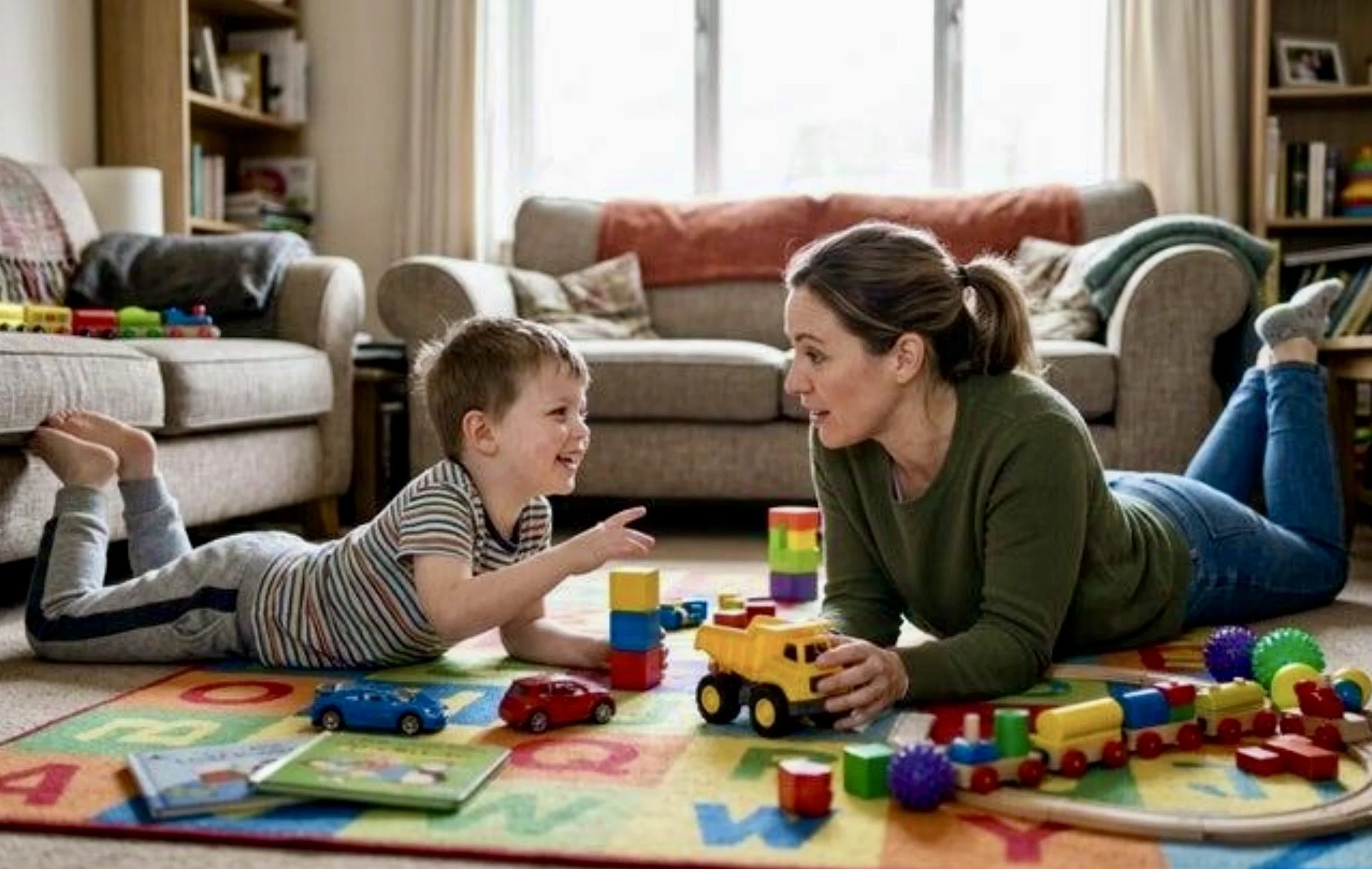
Floortime is the practice of bringing this understanding into the relationship. By following a child’s interests, joining them in what feels meaningful, and creating playful opportunities for shared attention, communication, problem-solving, and emotional connection, we help development grow from the inside out.
DIR helps us understand the child. Floortime helps us meet them there.
D
DEVELOPMENTAL
Children develop through a series of functional emotional capacities—from regulation and engagement to communication, problem-solving, symbolic thinking, and emotional reflection.
We meet the child at their developmental level and build from what is already emerging.
I
INDIVIDUAL DIFFERENCES
Every nervous system is different. Sensory processing, movement, attention, language, motor planning, and emotional regulation all shape how a child experiences and responds to the world.
We adapt the environment and our approach to the child—not the child to the approach.
R
RELATIONSHIPS
Development happens in relationship. Warm, responsive interactions with caregivers and other important people create opportunities for regulation, connection, communication, play, and learning.
Relationship isn’t simply part of the intervention. It is the pathway through which development happens.
01
Follow Their Lead
We begin with what captures your child’s interest, curiosity, and joy. Their interests become our doorway into connection.
WHAT THERAPY LOOKS LIKE
02
Join and Connect
03
Gently Expand
Before asking your child to enter our world, we enter theirs—building safety, trust, shared attention, and genuine connection.
Once connection is established, we introduce playful challenges that invite longer interactions, communication, flexibility, problem-solving, and new ideas.
04
BUILD CAPACITY
Over time, these shared experiences support deeper capacities for regulation, relationships, communication, thinking, play, and emotional growth.
There is no single way to do Floortime. There is your child’s way.
Your child may benefit from this approach if they are experiencing:
Autism or neurodevelopmental differences
Challenges with regulation or sensory processing
Anxiety, worry, or difficulty with uncertainty
Difficulty with transitions or flexibility
Differences in communication or social connection
Big emotions or behaviors that seem difficult to understand
Challenges with play, engagement, or shared attention
School avoidance or stress related to school
Developmental or cognitive differences
A history of approaches that have felt overly compliance-based or simply haven’t been the right fit
WHO THIS MAY BE HELPFUL FOR
You may be looking for something different.
Maybe you’ve been told repeatedly what your child can’t do. Maybe traditional therapy hasn’t quite reached them. Maybe you’re exhausted from trying strategies that seem to focus on changing behavior without understanding why it’s happening.
At Perfect Pitch, we can begin somewhere different: with curiosity about your child’s experience, respect for their individual differences, and a relationship in which they can feel safe enough to grow.
SUPPORT BEYOND THE SESSION
Development doesn’t happen only during the therapy hour.
PARENTS & CAREGIVERS
Parents know their children in ways no clinician ever could. I work collaboratively with caregivers to understand what may be happening beneath difficult moments and develop practical, relationship-based ways to support regulation, connection, communication, and growth at home.
Some of the most meaningful changes happen in ordinary moments—getting ready for school, playing together at home, navigating a difficult transition, or finding a new way to connect. When helpful, therapy can extend beyond my relationship with your child to include the people and environments that are part of their everyday life.
SCHOOLS & PROVIDERS
With appropriate consent, I can collaborate with teachers, school teams, occupational therapists, speech-language pathologists, physicians, and other providers so that the adults surrounding your child can share a deeper understanding of their developmental and emotional needs.
EVERYDAY LIFE
DIR/Floortime isn’t confined to a therapy room. Everyday routines, play, movement, transitions, shared interests, and even challenging moments can become opportunities for connection and development.
The goal isn’t to make home feel like therapy. It’s to help connection and understanding become part of everyday life.
READY WHEN YOU ARE
Every relationship begins with a first conversation.
If you’re wondering whether this approach might be the right fit for your child or family, I’d be glad to hear your story. A complimentary 15-minute consultation gives us a chance to talk about what you’re noticing, what you’re hoping for, and how I may be able to help.